
Program · 08 Jul 2026
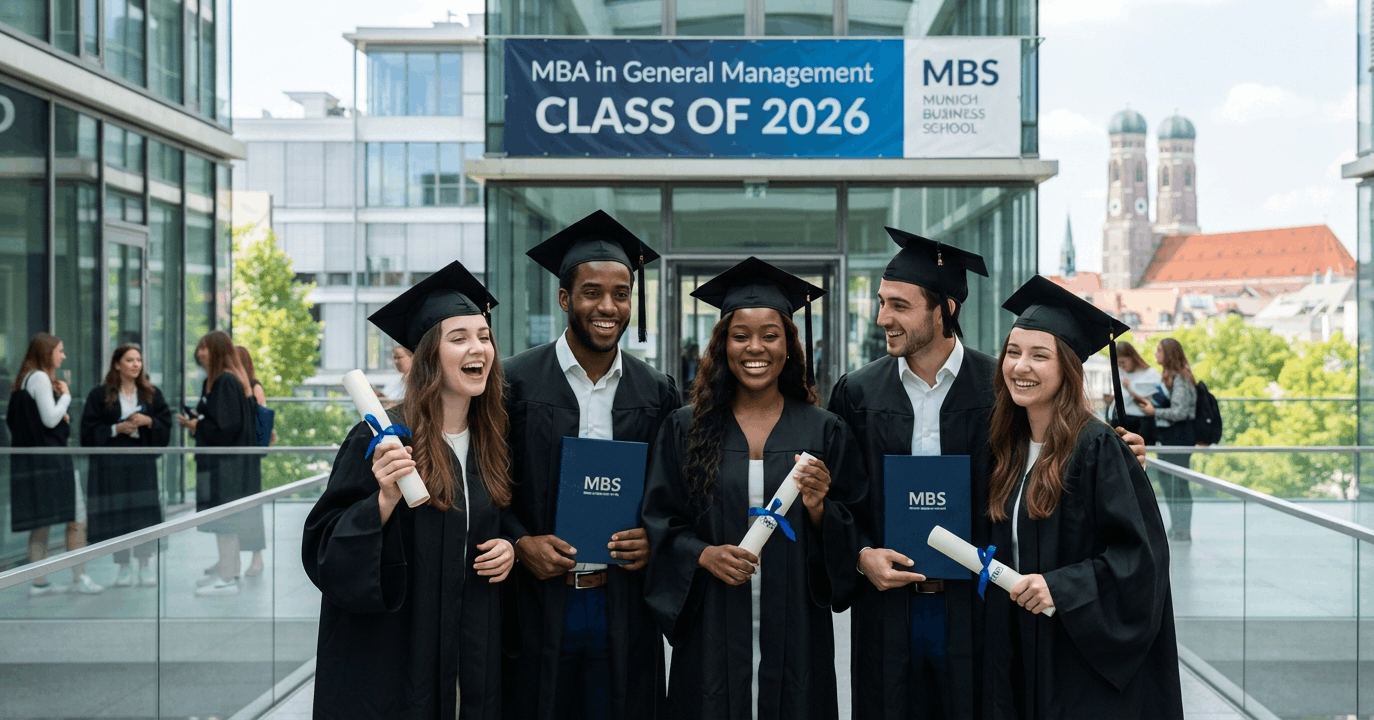
MBA in General Management at MBS in 2026
The MBA in General Management at MBS is a full-time, English-taught programme designed for professionals who want to st...
Read More
Free consultation — no commitment required.
Expert guidance to connect you with the best study abroad opportunities worldwide.

Admission Rate
98%
Across all destinations
Avg. Cost Savings
₹20L*
vs. self-managed admissions
300+
Partner Universities
50+
Destinations Covered
98%
Admission Rate
₹20L*
Avg. Cost Savings
*vs. self-managed admissions
Practical learning, low costs, and strong career outcomes.
Study MBA in Germany
Explore popular German cities known for top MBA programs and strong career opportunities.
Program · 08 Jul 2026
The MBA in General Management at MBS is a full-time, English-taught programme designed for professionals who want to st...
Read MoreJoin industry-focused programs designed for real career growth
Follow these simple steps to start your study abroad journey
Choose the best universities and programs based on your goals.
Prepare and complete required standardized tests.
Submit your application to selected universities.
Complete visa process and prepare for departure.
Everything you need to know before you begin your study abroad journey
Yes. Many MBA programs in Germany accept applicants from engineering, science, IT, or humanities backgrounds. Business fundamentals are covered in the initial curriculum, and admissions focus more on leadership potential, analytical ability, and work experience rather than undergraduate specialisation.
No. While many top-tier business schools recommend or require GMAT/GRE scores, several German MBA programs offer waivers based on strong academic records, relevant professional experience, or prior quantitative education. Executive MBA programs, in particular, often prioritise managerial experience over test scores.
Yes. Leading German business schools hold international accreditations such as AACSB, AMBA, and EQUIS, which are globally recognised quality benchmarks. Accreditation ensures the MBA curriculum meets international academic standards and improves the degree’s acceptance among multinational employers worldwide.
Work experience is highly valued in German MBA admissions. Most programs prefer candidates with 2–5 years of professional experience, as classroom learning relies heavily on peer discussions, case studies, and real-world problem-solving. Executive MBAs typically require higher leadership and managerial exposure.
German MBA programs generally offer one main intake (September/October), with some private schools also offering January or April intakes. While intakes are fewer than in the US, rolling admissions at private institutions provide flexibility for international applicants.
German language proficiency is not mandatory for admission, as most MBA programs are taught in English. However, learning basic to intermediate German significantly improves internship access, workplace integration, and long-term career prospects, especially in management roles within local or hybrid organisations.
Internships are a critical component of MBA education in Germany. Many programs integrate mandatory internships, consulting projects, or corporate collaborations, allowing students to gain EU work experience, build professional networks, and improve employability before graduation in the German and European job markets.
Yes. International students are legally allowed to work 120 full days or 240 half days per year during their MBA. Part-time work helps offset living expenses, though academic workload, especially during internships and project phases, should remain the primary focus.
Public universities often emphasise research, leadership theory, and lower tuition costs, while private business schools focus more on corporate exposure, career services, and international networking. Private schools typically offer stronger placement support, smaller class sizes, and industry-driven MBA specialisations.
Yes. After securing relevant employment, MBA graduates can transition to an EU Blue Card or German work residence permit. Continuous employment and tax contributions can lead to permanent residence eligibility, making Germany a strategic gateway for long-term European career mobility.
An MBA in Germany generally offers a higher return on investment due to relatively lower tuition fees and competitive post-MBA salaries. Graduates benefit from strong employer demand in Europe, manageable student debt, and long-term work-stay pathways that enhance financial stability.
Quick Overview:
Key Highlights: MBA in Germany
| Key Highlights | Course Details |
|---|---|
| Programme Duration | 12–24 months, full-time |
| Degree Awarded | Master of Business Administration (MBA) |
| Course Type | Triple-accredited (AACSB, EQUIS, AMBA) at top schools |
| MBA in Germany Fees | EUR 20,000–50,000/year (INR 21.3L–53.2L) |
| Top Universities | Mannheim Business School, ESMT Berlin, WHU, Frankfurt School, HHL Leipzig |
| Core Focus Areas | Strategy, Leadership, Finance, Consulting, Entrepreneurship |
| Post-Study Work Option | 18-month job-seeker visa after graduation |
| MBA Salary in Germany | EUR 53,075–113,750/year (INR 56.5L–121.0L) |
Germany has steadily emerged as one of the best places to pursue an MBA, especially for students looking for a balance between quality education and long-term career opportunities.
Home to Europe's largest economy, the country offers access to globally recognised companies, a practical learning environment, and excellent employment prospects after graduation.
Compared to traditional MBA destinations like the US and UK, Germany also provides better value for money, making it an increasingly popular choice for international students.
1. Study in Europe's Largest Economy:
Germany's economy is driven by industries such as automotive, engineering, finance, manufacturing, healthcare, and technology. MBA students benefit from studying close to some of the world's leading employers, with opportunities to participate in internships, consulting projects, networking events, and industry collaborations throughout their programme.
2. Better Value for Money
Compared with many MBA programmes in the US or UK, studying in Germany is often more affordable. While most internationally recognised MBA programmes are offered by private business schools, their tuition fees are generally competitive. Public universities may also offer lower-cost management programmes, helping students reduce their overall education expenses.
3. Strong Career Opportunities After Graduation:
Germany continues to experience demand for skilled professionals across consulting, finance, technology, logistics, renewable energy, and manufacturing. International graduates can apply for an 18-month post-study residence permit, giving them time to secure employment and begin their careers in Germany.
4. International Classrooms and English-Taught Programmes
Most MBA programmes designed for international students are taught entirely in English. Students learn alongside classmates from different countries, gaining global business perspectives while building communication, leadership, and cross-cultural management skills that employers value.
5. High Quality of Life
Germany consistently ranks among the best countries for quality of life. Efficient public transport, modern infrastructure, quality healthcare, and safe cities create a comfortable environment for international students. Its central European location is another advantage, making it easy to travel to neighbouring countries during weekends or semester breaks.
Germany is home to several internationally respected business schools that offer MBA programmes with strong employer connections, experienced faculty, and diverse classrooms. While many of these institutions don't appear in the overall QS World University Rankings, that's because they're specialist business schools rather than comprehensive universities.
Instead, their reputation is measured through business school-specific rankings such as the QS Global MBA Rankings, Financial Times MBA Rankings, and prestigious accreditations like AACSB, EQUIS, and AMBA. When choosing an MBA in Germany, these rankings and accreditations are often more relevant than a university's overall global rank.
Best Universities in Germany for MBA:
| University | Ranking | MBA Programme |
|---|---|---|
| Technical University of Munich (TUM) | #25, QS World University Rankings 2027 (institution-wide) | Executive MBA in Innovation & Business Creation |
| Frankfurt School of Finance & Management | #40, QS Global MBA Rankings 2026 | Frankfurt School Full-Time MBA |
| Mannheim Business School | #30, QS Executive MBA Rankings Global 2026 | Mannheim Full-Time MBA |
| HHL Leipzig Graduate School of Management | #151–200, QS Global Full-Time MBA Rankings 2026; #25 globally for ROI | HHL Full-Time MBA |
| WHU – Otto Beisheim School of Management | #22, Financial Times Masters in Management Europe 2025 | WHU Full-Time MBA |
| ESMT Berlin | #4 in Germany, Financial Times Executive Education 2025 | ESMT Full-Time MBA |
Beyond these top names, several other genuinely accredited business schools offer MBA routes, each with a distinct focus worth checking against your own career goals.
| University | Known Strength |
|---|---|
| GISMA Business School | AMBA-accredited, multiple campus locations across Germany |
| University of Cologne | Public university pricing, part of Germany's established state university system |
MBA programmes in Germany are built around a core-plus-elective structure, typically completed within 12 to 15 months full-time, with a smaller number of part- time and 24-month formats also available.
Most full-time programmes run on 60 ECTS credits for the one-year format, while extended 18-month tracks generally carry 90 ECTS, often including an international exchange term or a corporate internship.
Best MBA Courses in Germany:
| Programme Stage | Key Components |
|---|---|
| Core Modules | Financial accounting, managerial economics, strategy, leadership, organisational behaviour |
| Advanced Core | Corporate finance, marketing management, operations, business analytics |
| Electives | Consulting, entrepreneurship, sustainability management, digital transformation |
| Practical Component | Company projects, international study trips, optional exchange term or internship |
Each of Germany's leading business schools has built a distinct reputation around a specific specialisation, which is often more useful for shortlisting than comparing them purely on fees.
| University | Known Specialisation |
|---|---|
| Mannheim Business School | Consulting, financial services, best MBA ROI in Europe |
| WHU – Otto Beisheim | Entrepreneurship, "learning by doing" approach |
| Frankfurt School | Finance, banking, and asset management |
| ESMT Berlin | Technology, innovation, and sustainable business |
| HHL Leipzig | Entrepreneurship, four unicorns among its alumni |
An MBA in Germany for Indian Students requires applicants to hold a recognised bachelor's degree, several years of postgraduate work experience, and proof of English proficiency, since most top programmes are taught entirely in English.
Eligibility Criteria for MBA in Germany:
Most top German business schools expect a minimum of two to three years of postgraduate work experience, with the average successful candidate holding closer to three to eight years.
| University | Work Experience Expectation |
|---|---|
| Mannheim Business School | Minimum 3 years of postgraduate work experience |
| WHU – Otto Beisheim | Minimum 2 years of professional postgraduate work experience |
| ESMT Berlin, Frankfurt School | Typically 3-8 years, test optional at Frankfurt School and WHU |
Test policies vary meaningfully by school, with some requiring a formal exam and others waiving it for candidates with strong academic or professional profiles.
Applying for an MBA in Germany varies by school, but most top programmes, whether Mannheim, ESMT, Frankfurt School, or WHU, follow a broadly similar sequence built around your academic record, work experience, and test scores.
| Step | What to Do |
|---|---|
| Step 1: Shortlist Your Business School | Compare tuition, specialisation, and accreditation status |
| Step 2: Check Eligibility | Review work experience requirements and confirm whether the programme is test- optional |
| Step 3: Prepare Academic Documents | Bachelor's degree certificate, transcripts, CV, and letters of recommendation |
| Step 4: Take Required Tests | GMAT or GRE where required, alongside English proficiency scores |
| Step 5: Submit Application and Attend Interview | Complete your application through the school's portal and prepare for an admissions interview |
| Step 6: Accept Offer and Pay Deposit | Confirm your place and pay your tuition deposit or first instalment |
| Step 7: Apply for Your German Student Visa | Use your acceptance letter and proof of financial resources to begin visa formalities |
The total cost of MBA in Germany for Indian Students comes down to tuition fees plus cost of living, and the gap between top-tier specialist schools and other business programmes is genuinely wide.
MBA in Germany Fees (2026 Entry):
| University | Tuition Fee (EUR) | Tuition Fee (INR, approx.) |
|---|---|---|
| Mannheim Business School (Full-Time MBA) | €47,000 | INR 50.0 lakh |
| ESMT Berlin (Full-Time MBA) | €50,000 (total, including fees) | INR 53.2 lakh |
| TUM (Executive MBA in Innovation & Business Creation) | €39,000, plus student union fee | INR 41.5 lakh |
Note: Mannheim's €47,000(INR 50.0 lakh) fee covers teaching, learning resources, career services, and international study trips. Most schools also charge a small mandatory semester contribution in addition to tuition, typically €195– €200 (approx. ₹19,700–₹20,200) per semester.
The cost of living for MBA students in Germany depends heavily on the city, but it remains genuinely more affordable than the UK or US. The cost of living for a single person in Germany at around €992.80 (approximately INR 1.06 lakh) a month, excluding rent. Living costs run noticeably higher in Munich and Frankfurt than in Leipzig or Dresden, often by 15-20 percent.
| Expense Category | Average Monthly Cost (EUR) | Approx. Cost (INR) |
|---|---|---|
| Rent (1-Bedroom, City Centre) | €920-996 | ₹97,900-1.06 lakh |
| Rent (Shared Room/WG) | €450-850 | ₹47,900-90,400 |
| Utilities (85m² apartment) | €302 | ₹32,100 |
| Groceries | €200-300 | ₹21,300-31,900 |
| Public Transport (Deutschlandticket) | €63 | ₹6,700 |
| Total, Single Person (excl. rent) | €992.80 | ₹1.06 lakh |
Source: Numbeo
Note: Estimated living expenses in Germany exclude rent. Including accommodation, MBA students should budget €1,443–€1,989 (approx. ₹1.46 lakh–₹2.01 lakh) per month, depending on the city and type of housing.
Several MBA scholarships in Germany are available for international students, ranging from university-specific merit awards to government- funded scholarships that can help reduce tuition fees and living expenses.
| Scholarship | Eligibility | Coverage (EUR/INR) |
|---|---|---|
| ESMT MBA Scholarships | Full-time MBA applicants at ESMT Berlin; academic record, professional achievement, leadership qualities | Partial tuition reduction, varies by scholarship |
| Mannheim Business School Partial Scholarships | Full-Time MBA applicants; strong academic profile plus interview performance | Partial tuition reduction |
| Deutschlandstipendium | Talented students, regardless of nationality or income | €300/month (₹31,900/month) |
| DAAD Scholarships | International students meeting DAAD's specific programme criteria | Monthly stipend, varies by programme |
Note: Full-tuition scholarships are rare at Germany's top private business schools, but early application discounts and GMAT-linked fee reductions can meaningfully lower the total cost when combined with a merit award.
To study an MBA in Germany full-time, international students need a German National (D) Visa for study purposes. The process starts once you have your official admission letter from your chosen business school.
Eligibility Criteria:
International students must prove sufficient funds through a blocked account before their visa is approved. Germany's blocked account requirement for 2026 sits at EUR 992 per month (INR 1.06 lakh), working out to EUR 11,904 per year (INR 12.7 lakh), in addition to your programme's tuition fees.
| Cost Item | Amount (EUR) | Amount (INR, approx.) |
|---|---|---|
| Blocked account requirement (annual) | €11,904/year | INR 12.7 lakh/year |
| Monthly release amount from blocked account | €992/month | INR 1.06 lakh/month |
| German student visa application fee | €75 | INR 7,980 |
Documents Required for German Student Visa:
Post-Study Work and Part-Time Work Rules:
Graduates of an MBA in Germany move into consulting, finance, and corporate strategy roles, with MBA salary in Germany varying significantly based on the city, industry, years of experience, and employer.
MBA Jobs in Germany by Role:
| Role | Germany Salary Range (EUR) | Germany Salary Range (INR, approx.) |
|---|---|---|
| Consultant | €53,075-75,000/year | INR 56.5L-79.8L |
| Product Manager | €60,685-90,000/year | INR 64.6L-95.8L |
| Management Consultant | €63,000-85,000/year | INR 67.0L-90.4L |
| Finance Manager | €65,000-103,000/year | INR 69.2L-109.6L |
| Senior Consultant (Frankfurt) | €71,000-97,000/year | INR 75.5L-103.2L |
| Managing Consultant (Frankfurt) | €85,000-113,750/year | INR 90.4L-121.0L |
Source: Glassdoor
The biggest advantage of an MBA in Germany isn't just the lower tuition, it's the overall return on investment. Even at leading schools like Mannheim, WHU, ESMT Berlin, and Frankfurt School, the total cost is often significantly lower than a comparable MBA in the US or UK, while graduates still gain access to one of Europe's strongest job markets.
That said, choosing a business school based only on rankings can be misleading.
Each German MBA programme is built around different industry strengths. Mannheim has a strong reputation in consulting and finance, Frankfurt School benefits from its location in Germany's financial capital, ESMT Berlin is well connected to the technology and startup ecosystem, while WHU stands out for entrepreneurship and leadership development.
For Indian students, it's also worth looking beyond tuition fees. Consider factors such as internship opportunities, employer partnerships, alumni networks, post-study work options, and the industries hiring in the city where you'll study. These often have a greater impact on your career than a difference of a few thousand euros in tuition.
Start with the career you want after graduation, identify the schools that consistently place graduates into those roles, and then compare the total investment, employment outcomes, and long-term earning potential before making your final decision.
A completely free MBA is uncommon because most English-taught MBA programs are offered by private business schools. However, some public universities offer affordable management programs, and scholarships such as DAAD and Deutschlandstipendium can significantly lower your education expenses.
It depends on the university. Many leading business schools require a GMAT or GRE score, especially for competitive MBA programs. However, several universities either waive the requirement or accept applicants based on strong academic performance and relevant work experience.
Yes. Germany offers a strong return on investment through globally recognized business schools, comparatively lower tuition fees than many other countries, and access to one of Europe's largest job markets. Students also benefit from practical learning, international networking, and excellent career opportunities after graduation.
MBA tuition in Germany typically ranges from INR 21.3L–53.2L, depending on the university. In addition to tuition, students should budget for living expenses, health insurance, and other personal costs throughout the program.
Yes. After graduation, international students can apply for a post-study residence permit to remain in Germany while searching for employment. Once they secure a qualifying job, they may become eligible for long-term work and residence permits.
No. Most MBA programs for international students are taught entirely in English, so German is not required for admission. However, learning basic German can make everyday life easier and improve employment opportunities, particularly with local companies.
Germany has strong demand for MBA graduates in consulting, automotive, manufacturing, finance, technology, logistics, renewable energy, and healthcare. Many multinational companies actively recruit graduates with management and leadership skills from German business schools.
Some universities offer early-career MBA programs, but most traditional MBA courses prefer applicants with two to five years of work experience. Fresh graduates who lack professional experience may find a Master's in Management (MiM) or a specialized master's degree to be a better option.
Many MBA programs include internships, consulting projects, company collaborations, or industry placements as part of the curriculum. These practical experiences help students apply classroom knowledge, build professional networks, and improve their chances of securing full-time employment.
Yes. Indian students can apply for government-funded, university-specific, and private scholarships. Awards may cover tuition fees, monthly living expenses, or both. Applying early and maintaining a strong academic profile can improve your chances of receiving financial support.
Yes. Most Indian banks and NBFCs offer education loans for MBA programs in Germany. These loans can cover tuition fees, living expenses, travel, insurance, and other study-related costs. Loan eligibility usually depends on the university, admission offer, and the applicant's financial profile.