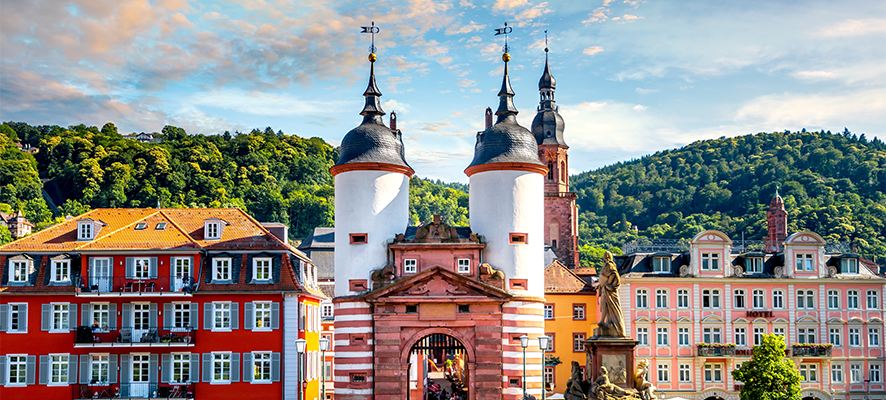
MBA in Heidelberg for Indian Students in 2026
Table of Contents
- Why choose MBA in Heidelberg?
- Top colleges for Masters in MBA in Heidelberg
- Year-wise Curriculum for MBA in Heidelberg
- Eligibility Requirements (Academic & Work)
- MBA in Heidelberg's Tuition Fees for International Students
- Semester Date & Academic calendar for MBA in Heidelberg
- How to Apply for MBA in Heidelberg
- Cost of Living: Transportation, Groceries & Accommodation
- Career Opportunities After completing MBA in Heidelberg
- Conclusion
For Indian students exploring an MBA in Heidelberg, it is essential to understand the local educational landscape. Notably, the city’s premier institution, Heidelberg University, does not offer a standalone, classic general management MBA program. Because direct options within the city are limited, students seeking high-quality, regionally accredited, or globally recognized MBA degrees typically look toward excellent neighboring programs.
When planning your budget for these regional alternatives, keep in mind that monthly living expenses might average around €800 (₹8,88,384), while initial university application fees often cost about €50 (₹55,524). Let’s explore your best neighboring options.
This table outlines the core components, duration, and estimated financial requirements for pursuing an MBA in the Heidelberg region.
Aspect | Major Details |
Degree Awarded | Master of Business Administration |
Program Duration | 1.5 to 2 Years |
Average Tuition (Yearly) | €10,000 – €16,000 (INR 11,04,800 – INR 17,67,680) |
Top Hiring Sectors | Healthcare, IT, Manufacturing, Finance |
Average Living Cost (Yearly) | €10,800 – €14,400 (INR 11,93,184 – INR 15,90,912) |
Why choose MBA in Heidelberg?
Heidelberg provides a remarkable blend of historic academic prestige and modern industrial innovation. The region connects ambitious international students directly to corporate hubs in Baden-Württemberg. Experiencing this unique environment facilitates robust networking, immersive experiential learning, and rapid career advancement.
Strategic Location: Positioned perfectly for unparalleled access to a diverse corporate landscape across Germany, bridging financial and tech hubs.
High-Quality Private Education: Private institutions offer intensely practical, globally accredited management programs perfectly tailored to current industry demands.
English-Taught Cohorts: You do not need to be fluent in German to study here; many top-tier MBA programs are taught entirely in English to accommodate global cohorts.
Innovation Ecosystem: A massive European center for healthcare, life sciences, and IT, providing incredibly unique management pathways for aspiring executives.
18-Month Post-Study Visa: Germany offers a highly attractive 18-month job-seeker visa after graduation, allowing Indian students ample time to secure a related job.
Top colleges for Masters in MBA in Heidelberg
While traditional public universities in Germany focus heavily on specialized research, private institutions in Heidelberg step in to provide intense, globally recognized management education. These business schools maintain incredibly strong corporate partnerships, ensuring graduates are perfectly positioned for high-level executive roles globally.
This table highlights premier institutions offering MBA programs in and around Heidelberg alongside their specific course specializations.
University | Program Duration | Course Specialization |
SRH Heidelberg | 18 to 24 Months | Healthcare Management, General Management |
Schiller International University | 15 to 18 Months | International Business |
Ludwigshafen University of Business and Society | 18 to 24 Months
| Logistics (International Management & Consulting), International Business Management, and uniquely, Wine, Sustainability & Sales. |
Mannheim Business School (Nearby) | 12 to 24 Months | General Management, Corporate Finance |
Esslingen University of Applied Sciences | 18 to 24 Months
| Industrial Management |
Year-wise Curriculum for MBA in Heidelberg
The academic curriculum is a meticulously structured journey that transforms professionals into strategic executives. It blends intense theoretical frameworks in the first year with highly specialized, hands-on corporate electives in the second year to ensure you are fully industry ready.
Year 1 Curriculum
This table details the foundational modules taught during the first year of the MBA program to build core competencies.
Module Category | Key Topics Covered | Academic & Practical Focus |
Financial Management | Corporate Finance, Managerial Accounting | Mastering financial reporting, risk assessment, and global valuation models. |
Operations & Logistics | Supply Chain, Data Analytics | Utilizing complex data to streamline industrial manufacturing processes. |
Organizational Leadership | Human Resources, Business Ethics | Developing cross-cultural communication and modern team leadership skills. |
Year 2 Curriculum
This table details the advanced electives and practical immersion elements of the final year to customize your career path.
Module Category | Key Topics Covered | Academic & Practical Focus |
Specialized Electives | Digital Transformation, Healthcare Management | Deep diving into tech ecosystems, medical integration, and business futures. |
Experiential Immersion | Corporate Internships, Live Case Studies | Solving real, high-stakes problems for actual clients like SAP or Roche. |
Entrepreneurship | Venture Capital, Startup Scaling | Learning how to pitch business models and secure early-stage funding. |
Eligibility Requirements (Academic & Work)
Securing a seat in a competitive MBA requires a solid mix of academic consistency, language proficiency, and relevant professional maturity. Universities strictly look for ambitious candidates who can bring unique industry insights and diverse perspectives into the classroom.
This table clearly outlines the essential academic, professional, and administrative prerequisites required for admission.
Requirement Category | Minimum Benchmark | Detailed Context |
Academic Background | 3 or 4-year Bachelor’s Degree | Requires a strong GPA to demonstrate robust analytical and quantitative capabilities for rigorous coursework. |
Professional Experience | 1 to 3 Years Minimum | Programs strictly require full-time, relevant work experience post-graduation to actively enrich case discussions. |
Language & APS | IELTS (6.5+) / APS Certificate | Mandatory English tests; APS is an absolute prerequisite to successfully verify all Indian academic documents. |
MBA in Heidelberg's Tuition Fees for International Students
Because classical public MBA programs are highly limited here, understanding the exact cost structure of private institutions is absolutely crucial. Strategically planning for these expenses ensures a smooth, stress-free academic journey without any unexpected financial hurdles during your studies.
Tuition fees at different colleges
This table outlines the estimated annual tuition fees at prominent private institutions in and around the Heidelberg region.
University | Annual Tuition Fees (EUR) | Annual Tuition Fees (INR) |
SRH Heidelberg | €15,326 | INR 16,93,216 |
Schiller International University | €14,000 | INR 15,46,720 |
Mannheim Business School | €19,500 | INR 21,54,360 |
Ludwigshafen University of Business and Society | €21,900 total program | INR 24,19,512 total program |
Esslingen University of Applied Sciences | €1,500 per semester | INR 1,65,720 per semester |
Semester Date & Academic calendar for MBA in Heidelberg
German institutions operate on a highly structured dual-semester system featuring distinct intake periods. Tracking these administrative deadlines is non-negotiable for ensuring your visa processing, university enrollment, and relocation happen without unnecessary delays or stressful last-minute complications.
Winter Semester (Primary Intake): Official lectures usually begin in late September or early October. To secure a spot, you should submit your applications between March and May.
Summer Semester (Secondary Intake): Classes commence in March or April, and application deadlines for this intake typically fall between November and January.
Visa Application Window: Indian students should book their visa slots and apply at least 3 to 4 months before the semester start date, immediately after receiving the university admission letter.
Orientation Week (O-Woche): Most universities host a highly recommended "Welcome Week" 1 to 2 weeks before official lectures begin.
Semester Breaks: The 2 to 3-month gap between semesters is rarely treated as a long holiday; MBA students strategically use this non-lecture period to complete mandatory corporate internships.
How to Apply for MBA in Heidelberg
The application process requires careful organization, compelling personal storytelling, and strict adherence to German administrative protocols. Submitting a meticulously crafted profile and ensuring no documents are missing is vital to avoiding outright rejection by competitive admissions committees.
Step 1: Secure the APS Certificate: Apply for your APS certificate at least 4-6 months in advance, as this is mandatory for all Indian applicants to validate their degrees.
Step 2: Clear Standardized Tests: Prepare for and clear your IELTS/TOEFL and GMAT/GRE exams, ensuring your scores meet the specific university cut-offs.
Step 3: Document Compilation: Draft a highly targeted Statement of Purpose (SOP), format a clean German-style CV, and secure two professional Letters of Recommendation (LORs).
Step 4: Submit via Uni-Assist or Direct Portal: Many German universities use the Uni-Assist portal to screen international applications. Pay the processing fee and submit early.
Step 5: Visa & Blocked Account: Upon receiving your acceptance letter, immediately open a German Blocked Account, transfer your living funds, and book your visa interview.
Cost of Living: Transportation, Groceries & Accommodation
Budgeting accurately for daily life in Heidelberg is just as critical as covering your tuition. While standard rent heavily dominates the budget, planning for mandatory health insurance and public transportation ensures you maintain a comfortable lifestyle without facing sudden financial shortfalls during your semesters.
This table carefully outlines the estimated annual living expenses required for a single international MBA student residing in Heidelberg.
Expense Category | Estimated Annual Cost | Key Inclusions |
Accommodation (Rent & Utilities) | €5,400 – €7,200 (INR 5,96,592 – INR 795,456) | Shared apartments (WGs), student dormitories, and basic utility bills. |
Groceries & Food | €2,400 – €3,600 (INR 265,152 – INR 397,728) | Regular supermarket runs, standard groceries, and occasional dining out. |
Transportation & Misc. | €1,800 – €2,500 (INR 198,864 – INR 276,200) | Mandatory statutory health insurance, public transit passes, and study materials. |
(Source: Numbeo)
Scholarships available
Here are five prominent financial aid options available for international students pursuing their MBA to help offset tuition and living costs.
Scholarship Name | Eligibility Criteria | Coverage & Key Details |
DAAD Scholarships | Minimum two years of work experience with strong academics. | Fully/partially covers fees and provides a monthly living stipend. |
Deutschlandstipendium | Merit-based award for students showing academic and social excellence. | Provides a €300 (INR 33,144) monthly stipend for at least one year. |
Heinrich Böll Foundation | Outstanding academic records with social or political engagement. | Offers comprehensive monthly stipends and study allowances. |
Friedrich Ebert Foundation | Exceptional academic merits and commitment to social democracy. | Grants a monthly stipend alongside full health insurance support. |
Private University Grants | High GMAT scores and highly competitive admission profiles. | Offers partial tuition fee reductions (often up to 25% off). |
Career Opportunities After completing MBA in Heidelberg
Similar to job opportunities in Germany, Graduating from a Heidelberg institution grants you direct access to highly prestigious corporate roles across the prosperous Baden-Württemberg state. The region’s dense concentration of technology and healthcare giants creates a constant demand for skilled management professionals across diverse sectors.
This table details seven lucrative job roles, average starting salaries, and top regional employers actively hiring MBA graduates.
Target Job Role | Key Employers | Average Base Salary (EUR / INR) |
Management Consultant | BCG, SAP, Heidelberg Materials | €85,000 (INR 93,90,800) |
Product Manager | Roche, Siemens Healthineers | €75,000 (INR 82,86,000) |
Strategy Director | BASF, Freudenberg Group | €90,000 (INR 99,43,200) |
Financial Controller | LBBW, Allianz, EY | €65,000 (INR 71,81,200) |
Supply Chain Manager | Amazon, Heidelberg Pharma | €70,000 (INR 77,33,600) |
Marketing Director | SAP, Gelita | €80,000 (INR 88,38,400) |
Healthcare Administrator | University Hospital Heidelberg | €72,000 (INR 79,54,560) |
Source: Glassdoor
Conclusion
An MBA in Heidelberg represents a highly strategic educational investment for Indian students aiming to build a dynamic global career. Despite the premium costs associated with private management education in this specific city, the exceptional networking opportunities, high post-graduation salaries, and the highly advantageous 18-month job-seeker visa offer a compelling return on investment. The region’s remarkably strong connections to European healthcare, IT, and manufacturing giants provide an excellent launchpad for ambitious professionals. By meticulously planning your finances and fully leveraging available scholarships, this degree equips you with the strategic skills required to succeed globally.
Ready to embark on your MBA in Heidelberg journey? Connect with our experts to know about concerned universities, courses, scholarships, admissions, and career opportunities.